
Are You Experiencing Burnout? Signs of Burnout to Watch For

Causes and Signs of Burnout for Women, those with Chronic Illness, and/or Neurodivergence
Imagine waking up every morning feeling more exhausted than the night before. You are doing “everything right”, but nothing seems to work. Your to-do lists feel endless, and you don’t know how you are going to make it through another day. Still, you grab your morning coffee with an extra shot, put on a smile, and push through. You know something isn’t right, but you can’t seem to find a solution.
This was my reality for years. I was always working, in the gym, or on the go. I thought that if I just worked harder, everything would fall into place. But, when my health started declining, the doctors had no answers. Multiple times, I switched jobs, assuming the problem was stress and a new environment was the answer. When I finally got my Hashimoto’s diagnosis, I thought that would solve all my problems. However, the doctor I was seeing helped to ensure that wasn’t the case. Check out this article for a full story on that.
Burnout had infiltrated every part of my life without me realizing. It affected my work, my daily routines, and even my health journey. I was trying to “fill my cup” when it was full of holes. It finally clicked that I had been living in a constant state of survival mode for well over a decade. I needed to make some drastic changes if I was going to ever recover from burnout and heal my body.
Did any of that sound familiar or resonate with you? In this post, I am breaking down what burnout really is and what causes it. I’ll also go over some signs of burnout to look out for. And, I will also speak specifically on burnout related to Chronic Illness and Neurodivergence.
- As a note: The content of this blog is not intended to diagnose, treat, cure, or prevent any disease. It is important to consult with a qualified healthcare professional before making any changes to your diet, exercise, medication, or other health-related routines
- This article contains affiliate links. These links reflect my honest recommendation of products/services, but I may receive compensation if you purchase using my links. As an Amazon Associate, I earn from qualifying purchases
- For additional on these notes, please review our Disclosure Policy
What is Burnout?
Burnout is more than just feeling tired or needing a day off. It occurs when you’ve been enduring stress, responsibilities, and a constant state of “doing” for so long. Eventually, both your body and mind reach their limit. You may feel exhausted regardless of how much rest you get. It might be hard to concentrate. You could lose motivation, or just feel… off. It’s as if you’re running on empty and unable to catch up.
Burnout is your body’s way of telling you, “I can’t keep going like this.” It impacts all aspects of your life: mood, energy, stress management, digestion, and even hormonal balance. And, for those of us who are Neurodivergent (ie. ADHD, Autism) or chronically ill, burnout can impact us more heavily and take longer for recovery. The encouraging news? Recovery is possible! (We will get to that a little later)

What Causes Burnout?
Rates of burnout have skyrocketed in the last couple of years. Even by just looking at Google search trends, burnout has become a hot topic. But what causes burnout, and why is it becoming more prevalent than ever?
First, lets talk about typical causes that lead to burnout. Then we will look at the science behind it. Typical causes include1:
- Workload – Having more than you can handle. This may include work responsibilities, family care needs, and personal to-dos. These tasks can add up to more time than you have in a day.
- Perceived lack of control – When you feel trapped in an environment, it can lead to burnout. This occurs when you feel like the situation cannot change. An example would be a job without a supportive manager or team. It also includes parental duties that seem never-ending. There is often alongside a lack of sufficient support from your spouse or others.
- Reward – This is when you feel you are not getting enough for what you are putting in. For those with chronic illness, this may look like doing everything you can think of to try to feel better. But, you are still not progressing as much as you would like. It can also mean you are not receiving enough pay for the work you do. Or, not getting enough recognition or a feeling of accomplishment.
- Community – Feeling constantly isolated or alone is another factor. You may experience burnout if you don’t feel connected with your friends, colleagues, family, or the communities you are a part of.
- Fairness – This is your perception of whether you or people you care about are receiving fair treatment. This can show up at work, in your home environment, or even from political activities and decisions.
- Values mismatch – Are you working for a job that asks you to compromise your values. Or are you part of a group or community (ie. church) that no longer aligns with your beliefs. Having to constantly compromise, defend, or question your values is another sure way to lead to burn out.

So, burnout can happen in all aspects of your life, not just with work. It might also be no surprise to learn that burnout impacts a higher percentage of women than men. For the remainder of this article, I will be referring mainly to women. However, know that much of this also applies to everyone, regardless of gender identity.
Science Behind Burnout
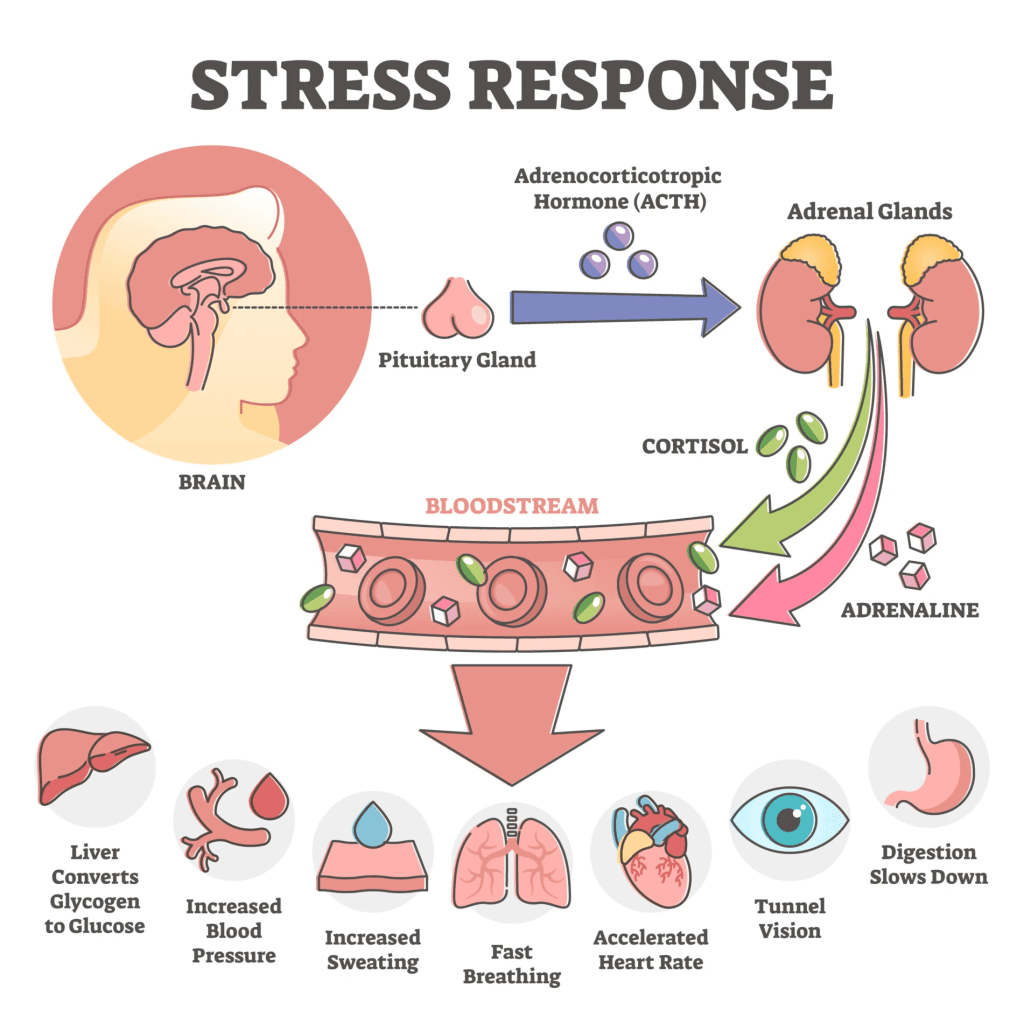
Burnout typically happens when stress outpaces recovery for too long. Your body’s stress system is led by your adrenal glands and the hypothalamic-pituitary axis (HPA axis)2. It is meant to be used in short-term bursts. This is to protect the body and weather high-stress situations. Unfortunately, if you are reading this, you probably have kept your nervous system in this high-stress state much longer than it can typically handle. See some examples of these stressors above.
When that system stays in this mode, it impacts different parts of the body. This includes your hormones, sleep cycles, blood sugar regulation, gut health, and immune response3. Eventually, your body and mind can’t keep up. This can lead to a series of mental and physical health concerns, which we will go over below.
What Are the Signs of Burnout?
Burnout can present in multiple ways. Signs of burnout aren’t always just associated with a feeling of exhaustion. Often, people experience emotional symptoms. But, they may also experience physical symptoms due to the impacts of burnout on the body, as addressed above. But are some of the more common signs of burnout?
Common Signs of Burnout for Women5,6
- Exhaustion: This one might be the most obvious signs of burnout. You can’t ever seem to feel caught up on sleep, no matter how much you rest.
- Feeling Disconnected or Numb: You may start to lose interest or enjoyment in things that previously meant a lot to you (ie. work, family, hobbies)
- Decrease in Motivation: It may become harder for you to get started or stay focused on a task. Tasks may feel overwhelming or just not as important as they used to be.
- Stuck in Survival or “Fight or Flight” Mode: You may see an uptick in anxiety-like symptoms. You may be more easily startled or not able to rest. You may be telling yourself, “I just have to make it through this week…” over and over.
- Physical Symptoms: When your body has gone too long in this state, you may start experiencing physical symptoms. These symptoms are especially related to the systems most heavily impacted by burnout and high stress that we discussed above. What are some of those signs of burnout?
- Headaches
- Body Aches
- Loss of Appetite
- Insomnia
- Extreme Fatigue
- Lowered Immunity
- Hormonal Imbalances

It is important to note that many of these symptoms can also be seen in other mental and physical health concerns. If you are experiencing any of these symptoms, speak to a health professional. They can help address any immediate medical needs.
Long-Term Effects of Chronic Burnout
Symptoms of burnout might be temporary and alleviated upon recovery from burnout. However, there can be long-term impacts of burnout, especially if the burnout is chronic. This happens because burnout impacts multiple systems in our body, like the HPA axis mentioned above. It also affects the structures and processes in the brain.7
Because of these impacts, there might be other conditions that arise and/or may be happening alongside burnout. For me, this was mental health impacts, PCOS, and Hashimoto’s, along with some other conditions.
As mentioned above, whether the symptoms are temporary due to burnout or related to a larger concern, it is important to discuss this with a medical professional. Talking to a professional ensures proper care.

What About Burnout Recovery?
The good news is that recovery from burnout is possible. Check out my burnout recovery article available next week for more on that. I will also have a full burnout recovery toolkit for free to download in that article as well.
You can typically take a lot of the same recovery steps if you are dealing with additional health concerns alongside burnout. However, these are unique situations that require a bit more understanding and potentially different protocols. I have a little bit below to start. We will dig more into that in my burnout recovery article.
Neurodivergent Burnout
We often miss an important point about burnout. It is sometimes assumed that all burnout is the same. Many recommendations include going away on vacation or just eliminating some obligations. These can be helpful. However, a lot of the time, this is not enough. This is especially true when the root cause is different from typical burnout. It also applies when someone’s way of processing is not neurotypical.
So, when someone is experiencing ADHD Burnout or Autistic Burnout, what makes that different? It first starts with how burnout develops. Much of our modern society is set up to serve neurotypical behavior. Neurodivergent thought and behavior can show up differently and are sometimes criticized or penalized. We even generally teach Neurodivergent people how to act so as not to disrupt this neurotypical setup we have.

Signs of Burnout with Neurodivergence
That is a very simplified explanation. But, my point is that most people who are Neurodivergent do something called “masking”. People mask for many reasons. Typically, it is to fit in with or follow the rules of the status quo that we have set in society. This takes a lot more energy, can cause a feeling of disconnect or loneliness, among other things. All of this can lead to burnout.
The symptoms and signs of burnout might show up differently due to “masking” and potential differences in thoughts and behavior. They might not be recognized in the same timeline. This may cause a delay in identifying burnout, impact the severity, and increase the time of recovery.
When it comes to recovery, the time and steps needed may also differ. If someone goes back to the same environment, especially if continuing to “mask”, this can also impact recovery. We will dig more into recovery in my next article!
As a note, this is an oversimplification and generalization of burnout for those with Neurodivergence. No two people are the same, even if they hold the same diagnosis. If this is a topic you want to know more about, let me know. I can provide a more in-depth article on just this subject. Additionally, I can provide more resources.
Burnout and Chronic Illness

Another key factor that can get overlooked is chronic illness. For anyone dealing with a chronic illness, the impact that it has on burnout isn’t always considered. This is particularly true for illnesses that are more ‘invisible’. So how does it relate?
First, a lot of the signs and symptoms can look similar. Am I dealing with burnout, a flare of a chronic health issue, or something else? This is why I mention multiple times the importance of working with your care team to differentiate this.
You may still be uncertain if you are experiencing both, even after examining the causes and signs of burnout. The great news is that the tips related to burnout recovery may even help a chronic illness flare. However, follow your doctor’s recommendations on this.
Recovery from burnout can take longer when dealing with a chronic illness. It is important to consider this factor. It might also look different due to the stress chronic illness already places on the body. Severe burnout can also potentially be a contributing factor to the onset of a chronic illness.
For both of these scenarios, navigating a chronic illness during burnout recovery takes extra care. This is especially true if you cannot leave the environment that contributed to it. We will explore this more in my next article. I will give you some tips and resources to help navigate this.

Final Thoughts!
Burnout does not just come from work. It can present itself in many ways. And, the signs of burnout look different for many people. This is especially true for those with additional factors like Neurodivergence or chronic illness.
We went over causes and signs of burnout, as well as some unique circumstances related to burnout. Now that we have that base, we will look at how you can prevent or recover from burnout. Get access to this information and my free burnout recovery workbook with my next article. It also includes the actual steps that I took in recovering from burnout with a chronic illness. I also share what I do now to keep it at bay. Additionally, I have another upcoming article where you can see some of my favorite tools in my burnout toolkit. Check back here or follow me on Instagram to get notified when these come out!
What questions do you still have? Are you feeling stuck or looking for more? Drop a comment below. Or reach out to me here for a free call. I can answer all of your questions and provide you with resources to help you get the support you are looking for.
As always, have a beautiful day and all the luck to you on your wellness journey!
- Saunders, Elizabeth. “6 Causes of Burnout, and How to Avoid Them.” Harvard Business Review, 2019, hbr.org/2019/07/6-causes-of-burnout-and-how-to-avoid-them. ↩︎
- Herman, James P., et al. “Regulation of the Hypothalamic-Pituitary-Adrenocortical Stress Response.” Comprehensive Physiology, vol. 6, no. 2, 15 Mar. 2016, pp. 603–621, pmc.ncbi.nlm.nih.gov/articles/PMC4867107/, https://doi.org/10.1002/cphy.c150015. ↩︎
- Chu, Brianna, et al. “Physiology, Stress Reaction.” PubMed, StatPearls Publishing, 7 May 2024, www.ncbi.nlm.nih.gov/books/NBK541120/. ↩︎
- McLeod, Saul. “What Is the Stress Response | Simply Psychology.” Simplypsychology.org, 9 Nov. 2023, www.simplypsychology.org/stress-biology.html. ↩︎
- Edú-Valsania, Sergio, et al. “Burnout: A Review of Theory and Measurement.” International Journal of Environmental Research and Public Health, vol. 19, no. 3, 4 Feb. 2022, pp. 1–27. NCBI, pmc.ncbi.nlm.nih.gov/articles/PMC8834764/, https://doi.org/10.3390/ijerph19031780. ↩︎
- Kakiashvili, Tamar, et al. “The Medical Perspective on Burnout.” International Journal of Occupational Medicine and Environmental Health, vol. 26, no. 3, 1 Jan. 2013, https://doi.org/10.2478/s13382-013-0093-3. ↩︎
- Savic, Ivanka. “Structural Changes of the Brain in Relation to Occupational Stress.” Cerebral Cortex, vol. 25, no. 6, 18 Dec. 2013, pp. 1554–1564, https://doi.org/10.1093/cercor/bht348. Accessed 16 Apr. 2021. ↩︎

This is such an informative post about burnout. I love how you broke down the signs and how burnout can present itself. Thanks for sharing!
Thank you! I will be following up with a post this week on burnout recovery as well. I think it is so important to talk about burnout and stress more to help people better understand and seek help as needed. Thank you for stopping by!
Great post! So many of these things I can relate to, and something I need to look into more. Thank you for sharing!
It is wild that so many people are experiencing this! I am sorry that you are experiencing this. Reach out if you are ever looking for support and good luck on your wellness journey! Thank you for stopping by!
Thank you for sharing this info. Burnout is something always looked upon as temporary and quick fixes are suggested but there it can lead to depression and chronic heart disease and other.
Absolutely! It is wild how much stress and burnout can impact our minds and bodies! Especially in a society where it feels like stress is never ending, it is so important to talk about. Thank you for stopping by and reach out if there is anything you ever need!