
Do Vision Boards Really Help You Achieve Your Goals?

The Science and How-to of Creating a Vision Board That Actually Works for You
Vision boards are just a cute craft night activity and maybe just a little ‘woo-woo’. These activities feel good, but they cannot possibly lead to real change. Right? At least that is what I used to think. Then I started paying attention to what actually happens when intention, clarity, and science come together with the craft of creating.
A vision board is not magic. You are not going to see a miracle manifestation of your dreams. It is, however, a tool for direction and focus. When done intentionally, it works with your brain and helps you achieve anything you are willing to work for!
This guide breaks down why vision boards work, how to create one that aligns with your real life, and how to use it without pressure or burnout.
- As a note: The content of this blog is not intended to diagnose, treat, cure, or prevent any disease. It is important to consult with a qualified healthcare professional before making any changes to your diet, exercise, medication, or other health-related routines
- This article contains affiliate links. These links reflect my honest recommendation of products/services, but I may receive compensation if you purchase using my links. As an Amazon Associate, I earn from qualifying purchases
- For additional on these notes, please review our Disclosure Policy
Why Vision Boards Work: The Science Behind the Practice
Your brain is constantly filtering information. At any given moment, you are exposed to millions of bits of sensory data, but you only consciously notice a fraction of it.
When you start to put focus on something, your brain starts to bring that data to the forefront. This is why you are all of a sudden hearing a song everywhere, after a friend introduced it to you. Or you start to notice just how many red cars are on the road when you begin to shop for one of your own.
Because of this, a vision board can work to your benefit. It creates visual specificity, helping with that filtering. And it helps to keep goals present without much effort, giving you a constant, gentle reminder, further reinforcing those neural pathways.
The key difference between a vision board that works and one that does not is intention and integration. For more on the science behind why vision boards work and the benefits, check out the footnotes below. 1,2,3
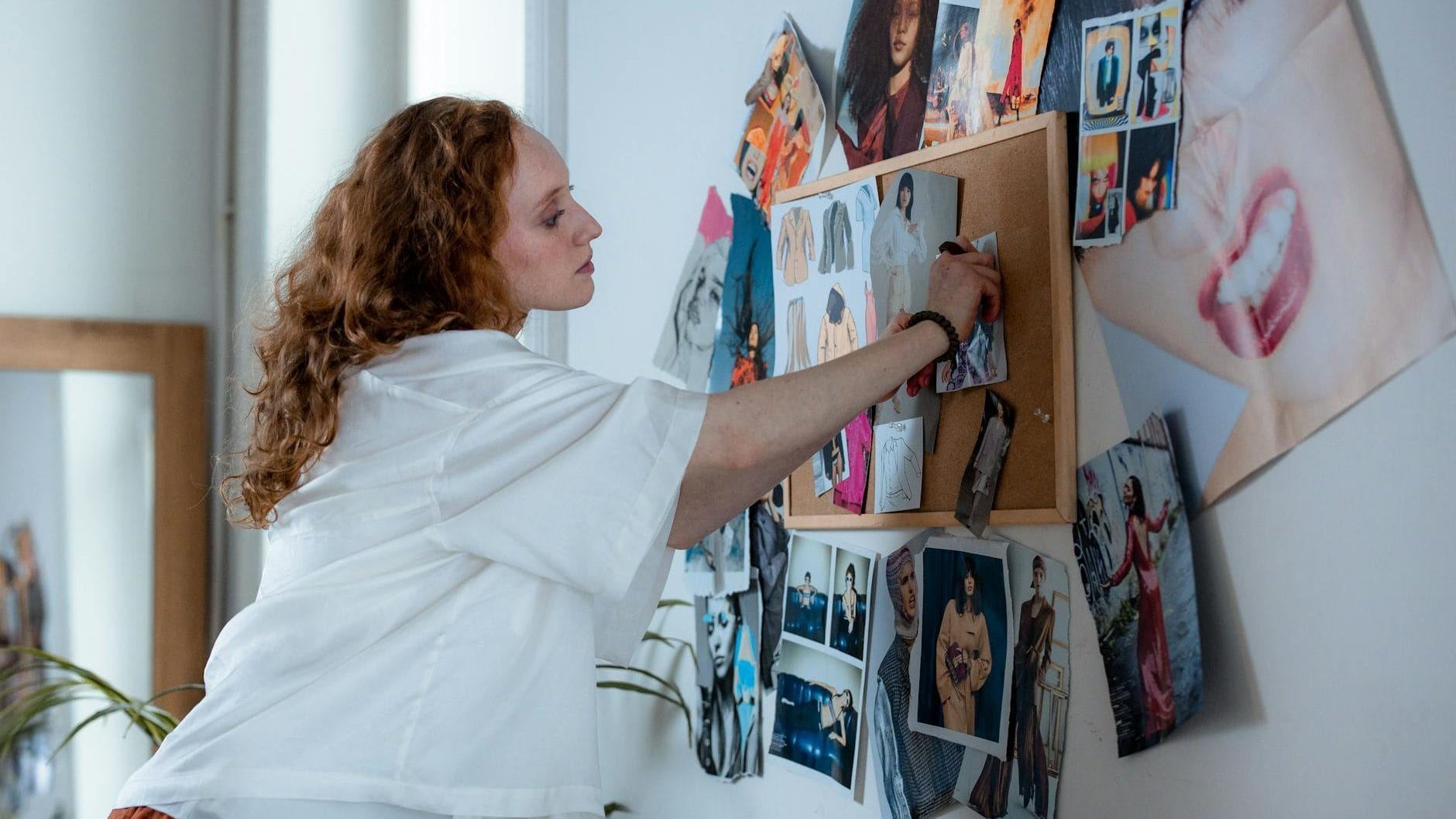
Vision Boards vs Goal Lists: Why Visuals Matter
Goal lists are useful, but they live in the logical, effort-driven part of the brain.
Vision boards:
- Activate emotion and imagination
- Support motivation gently
- Help regulate stress by creating a sense of direction
- Reinforce who you are becoming, not just what you want
This matters especially if you are navigating burnout, hormonal imbalance, chronic stress, or a season of rebuilding. When the nervous system is overloaded, forcing productivity can backfire. Visual tools support clarity without the added stress.
Creating a Vision Board
Now that we know a little bit about why vision boards work, how do I build a vision board that works for me specifically?
Step One: Reflect Before You Create
First, ask yourself:
- What drained me this past year?
- What actually worked?
- Where did I feel aligned?
- What do I want more of, not what I think I should want?

This step is non-negotiable. Without reflecting first, a vision board is just a collage.
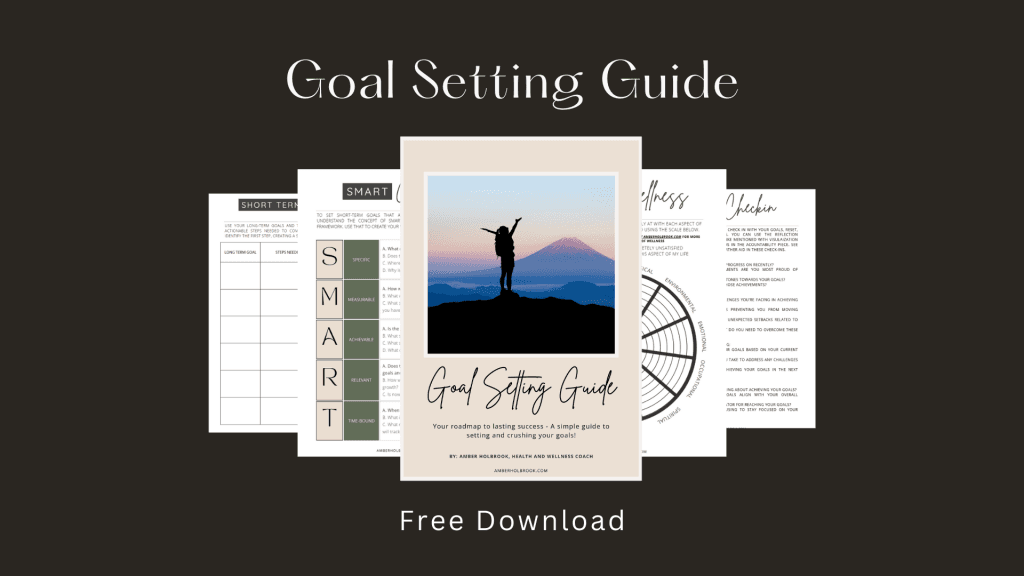
If you want a little structured guidance, my free goal-setting guide walks you through this process.
You can download it here:
Step Two: Choose Themes Over Rigid Goals to Start
Instead of starting with exact outcomes, start with themes.
Examples:
- Energy
- Creativity
- Financial freedom
- Nervous system regulation
- Learning
- Connection
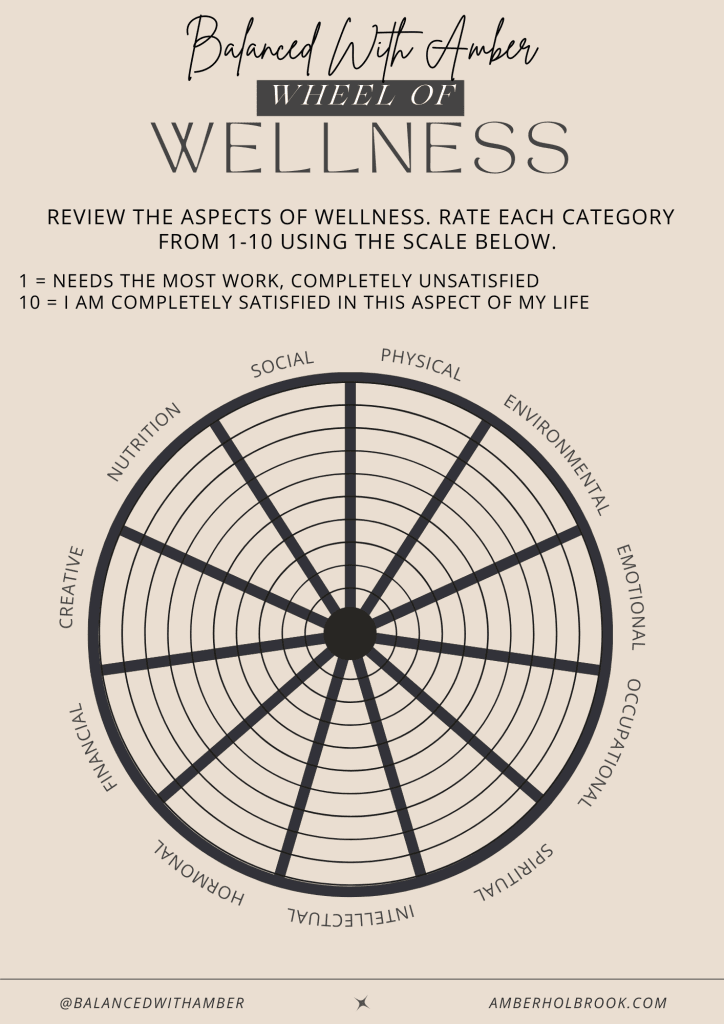
Themes give your brain flexibility. They allow your goals to evolve while still pointing in the same direction. Not sure where to start? Fill out this Wheel of Wellness (below and in my goal-setting guide) to see what facets of wellness you are feeling need the most focus. Then, build from there.
Step Three: Using the Themes, Create your Goals
Themes give you direction. Goals provide you with traction.
A vision board without goals can feel inspiring but vague. Goals without a vision can feel rigid and draining. The sweet spot is letting your themes help build your goals and give them deeper meaning. This is where vision boards start really being useful.
Start by looking at each theme you identified and ask:
- What would progress in this area actually look like?
- What feels supportive, not overwhelming?
- What is within my control right now?
This can start with long-term wishes and then be brought into short-term SMART goals. Your goals do not need to be big or flashy. In fact, they work better when they are clear, realistic, and tied to your current capacity.
For example:
- Theme/Long Term Goal: more energy
Goal: go to bed 30 minutes earlier on weeknights - Theme/Long Term Goal: financial freedom
Goal: track spending once a week - Theme/Long Term Goal: learning/get my PhD
Goal: block one non-negotiable hour a week for researching programs
Notice how these goals focus on behavior and consistency, not perfection.
When your goals align with your vision and calm your nervous system, follow-through becomes easier. To build on the goals further, refer to the SMART framework. This approach is also science-backed to make sure you have a clear direction for your goals.
For more on the in-depth of creating goals, use the Goal Setting Guide, and refer to my article on the subject, here.
Once your goals are defined, your vision board becomes a visual anchor. It reminds you why those goals matter, especially on the days when motivation dips.
From here, you are ready to build your board.
Step Three: Build Your Vision Board Intentionally
You can create a vision board digitally or physically. Both work.
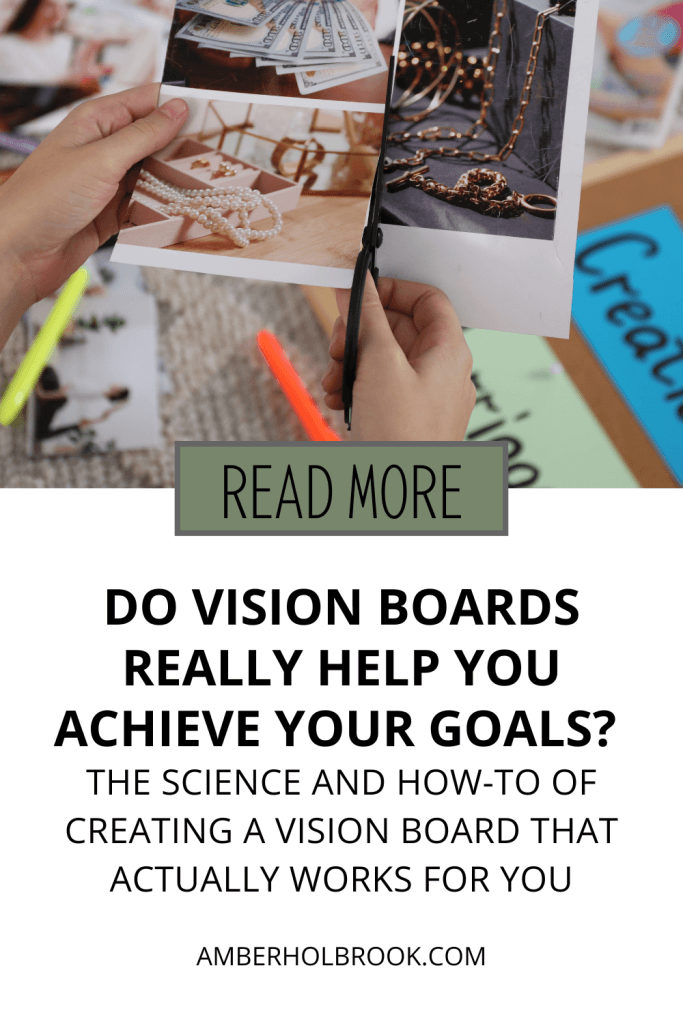
For a physical board. I start with a thick poster board. (In a frameable size. I discuss why below.) Then I use a combination of magazines, stickers, scrapbook tools, etc, to glue down. You can also use a tack board or something similar if you want it to be able to be changed. I have some material options here, and I will discuss a bit more about this below. I love a collage style, but you can organize it in whatever way motivates you.
You can also use Canva, Pinterest, or another tool to create a digital version if you aren’t as much into physical crafts.
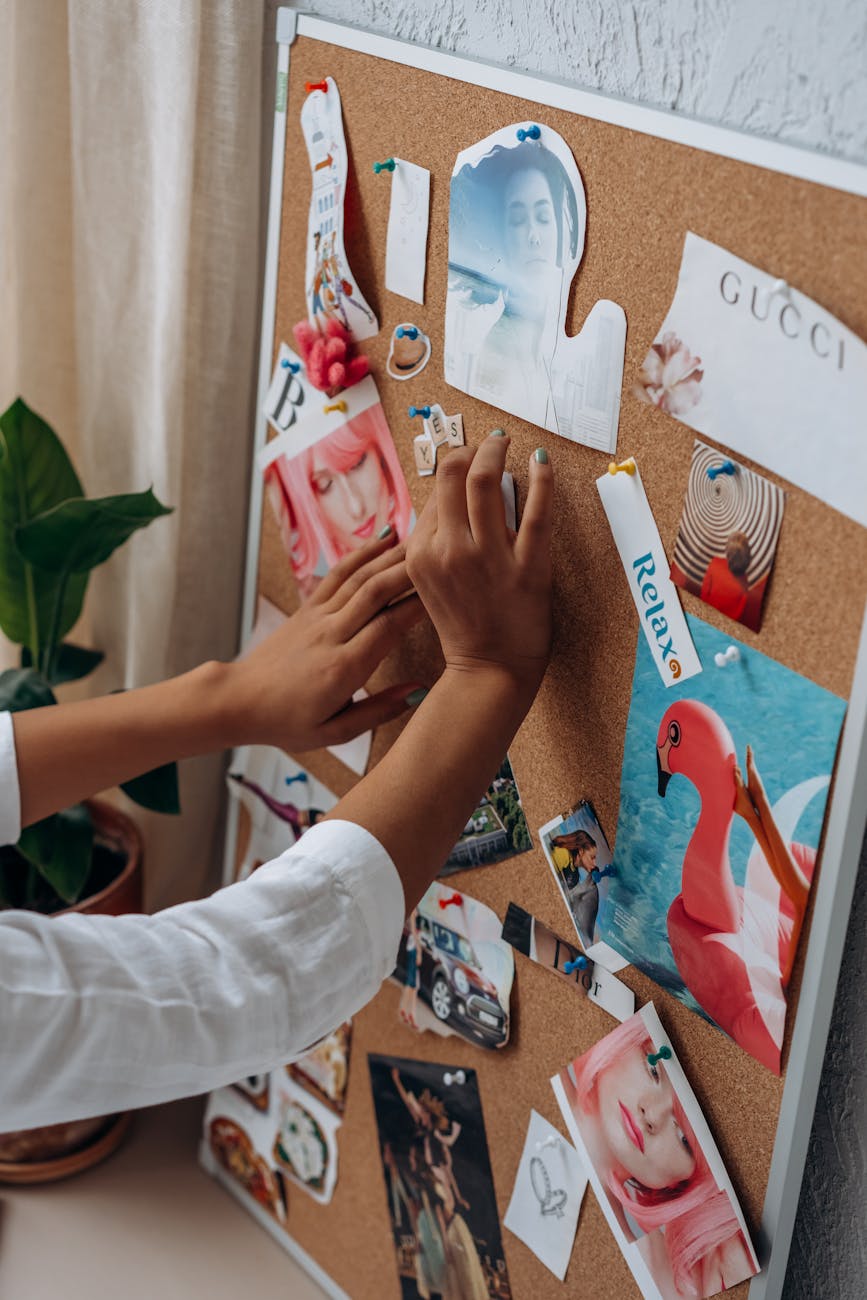
What to include
- Images that evoke emotion and align with your theme/goals
- Words or phrases that feel grounding and motivating
- Visuals that represent you reaching your goals, as well as the day-to-day tasks, and the feeling that you want to evoke
Your brain responds more strongly to lived experience than abstract success. So make sure that the images and words resonate with you specifically!
What to avoid
- Images that trigger urgency or inadequacy
- Other people’s timelines
- Negative wording or imagery
Step Three and a Half: Create Your Board with Like Minded People
Creating a vision board alone can be therapeutic. But, there is something truly inspiring about being surrounded by others in the process of manifesting their dreams.

When you start setting goals and building vision boards in the presence of other like-minded people, you gain so much. You hear new perspectives. You start to articulate your goals out loud, giving them tangibility. Inspiration and courage fill the air. And, you realize everyone is figuring life out as we go, helping you feel less isolated and more connected.
I take time every year for self-reflection and goal setting. Then, get together with others. These gatherings help bring my visions to life and further inspire me. It is exactly what is needed to give me the boost to chase the dreams I actually want!
Step Four: Place Your Vision Board Where It Supports You
Your vision board should be visible and in a place that brings you calm, but also motivation.
Good places:
- Bedroom
- Office
- Phone or computer lock screen
- Planner or journal
You want passive reinforcement and a constant reminder in a way that doesn’t bring on unnecessary stress.
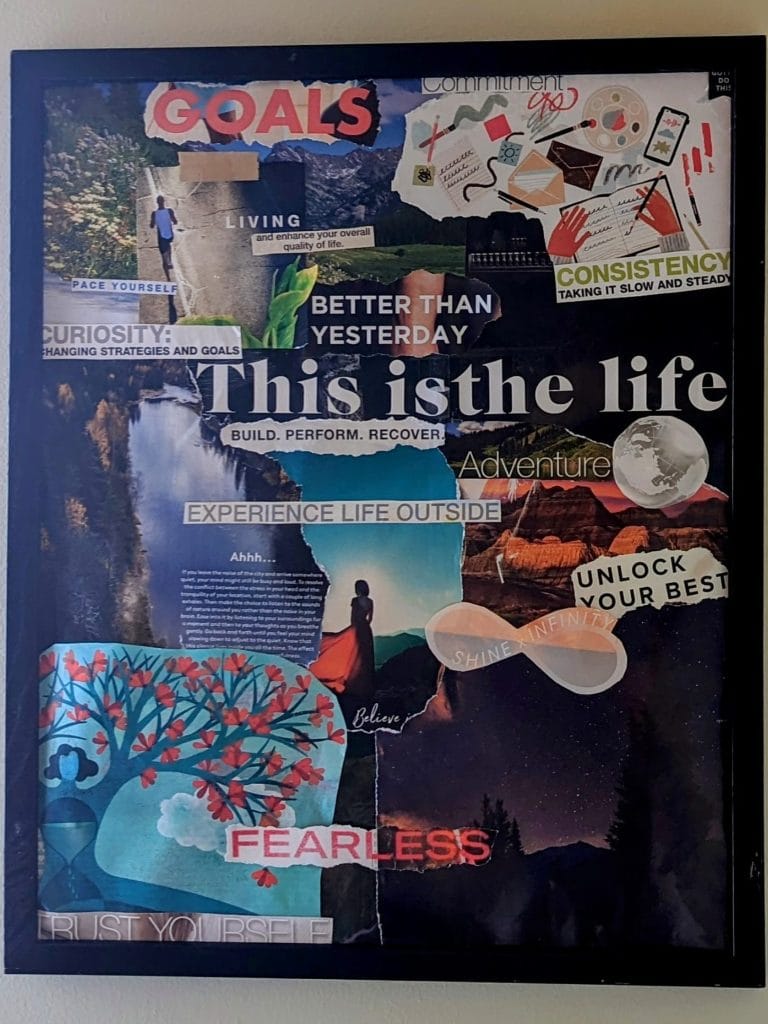
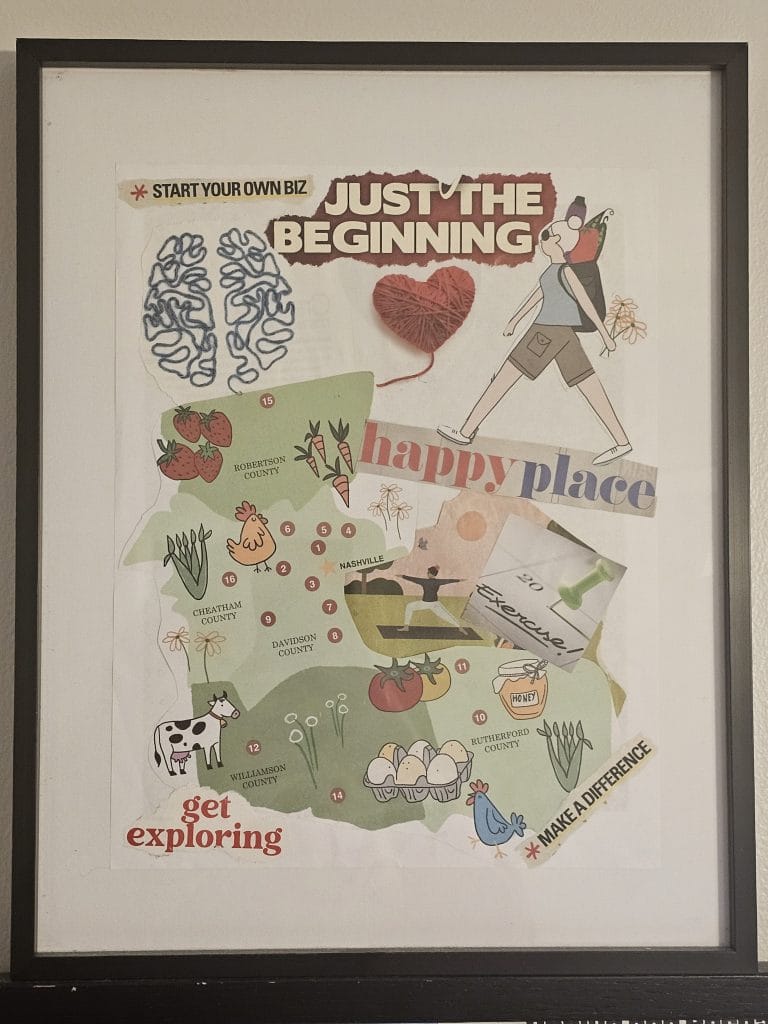
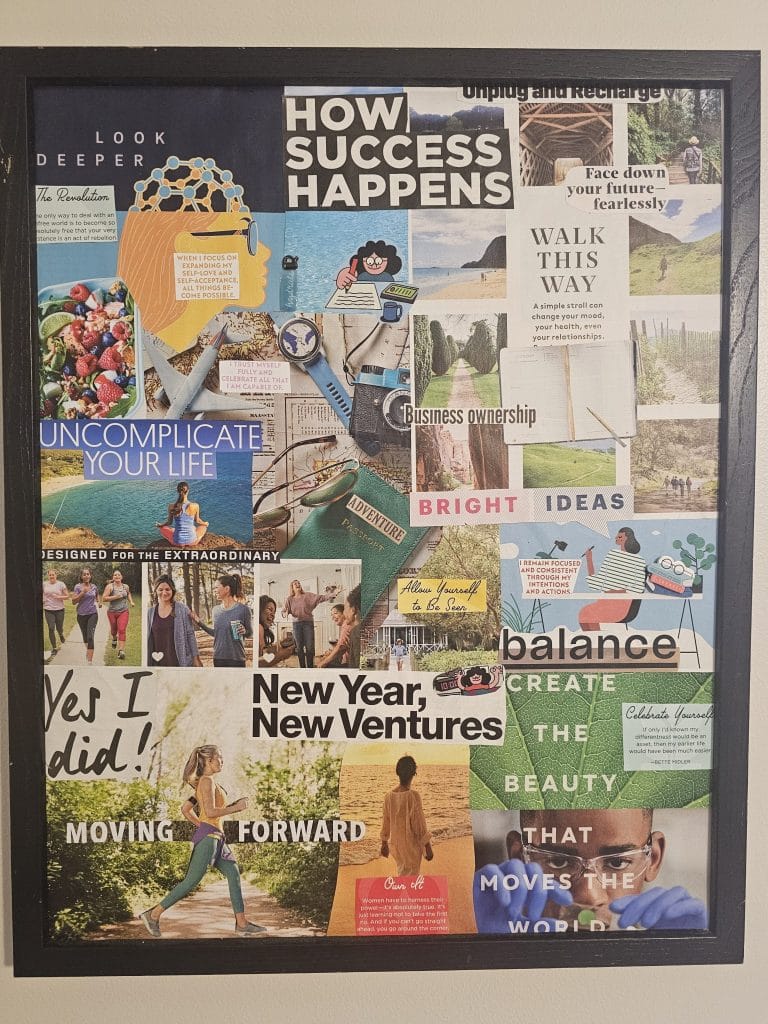
For me, that is using it as an art piece. I have my big vision board framed and placed in a motivational collage of photos and artwork near my bed. Then a more business-focused board framed and visible from my desk, and I have even created a digital copy of my board to use a a backdrop on my phone. I get to smile every day at the art I created that is also a soft reminder to what I have accomplished and where I want to go!
Step Five: Integrate Your Vision Board and Goals Into Your Daily Routine
This is where most people get stuck. You have this pretty creation; now what? Even with the reminders, it doesn’t magically make things happen. You have to be intentional with how you leverage the reminders and motivations that the vision board can create for you.
Vision Boards work best when paired with:
- Small, consistent actions
- Realistic pacing
- Self-trust
- Regular reflection
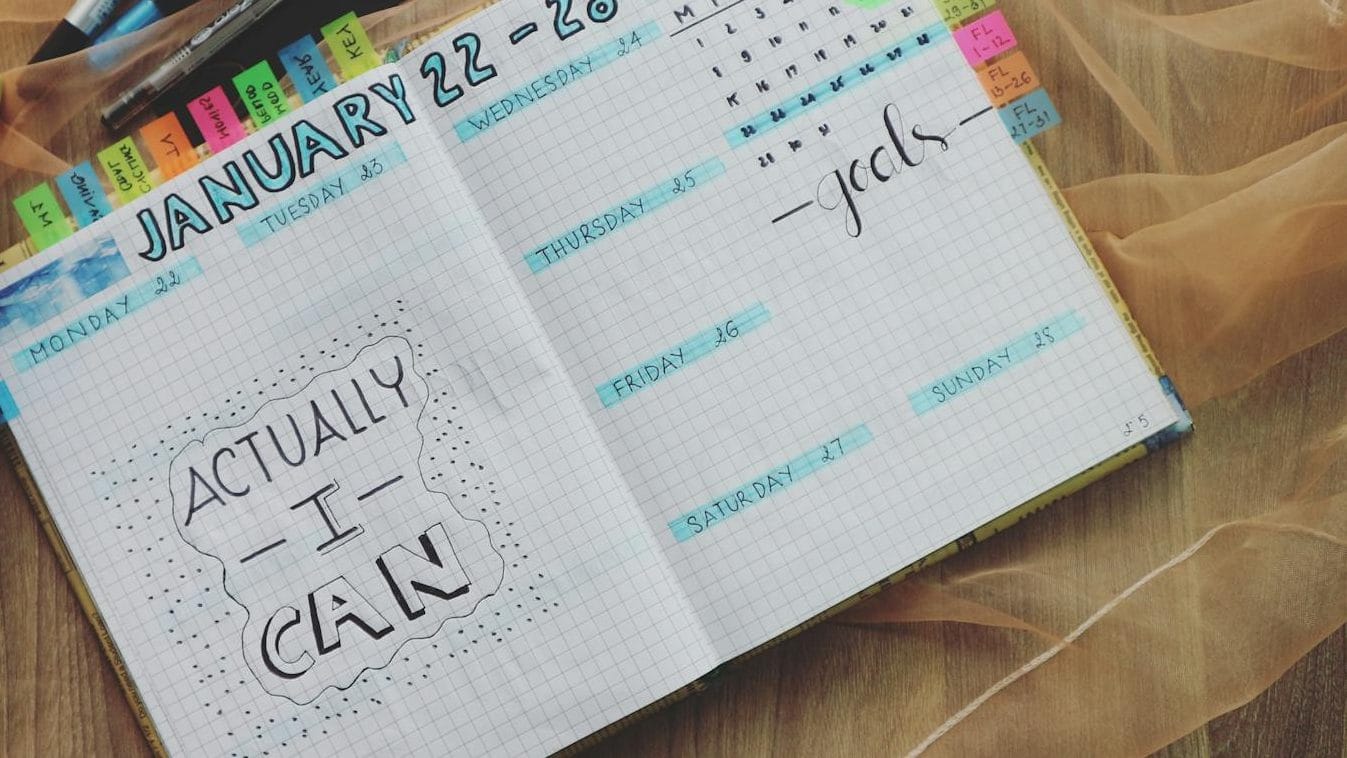
You can try to add a habit tracker. Or, use a planner to write out your goals, then break them into monthly/weekly/daily steps. Try to create routines that support your goals, to help them become habits. Journal regularly. (There are some great reflection questions in my Goal Setting Guide, specific to reflecting on your progress.) And consider an accountability partner; maybe a friend, family member, or even a coach.
If you are curious about how a coach can help or are ready to jump in, book a free call with me here!
Vision Board Supplies I Recommend
You do not need expensive tools for this. You can create something to be excited about with any budget. Zero budget – create a digital planner or use materials lying around the house.
If you have even a small budget, here are a few of my favorites:
- A simple cork or poster board
- Magazines, photos, stickers, and any other images/words that inspire you
- Markers
- Glue sticks
- Scissors
- A Journal/planner for goal setting and reflection
- Frame if you want to level up your board and make it art
I keep a small list of affiliate-recommended supplies that I have vetted. If you choose to use them, it supports my work at no extra cost to you.
👉 [View my recommended vision board and goal-setting supplies]
Final Thoughts
A vision board is not a set-in-stone contract. Things change. We grow. New opportunities arise. Use your vision board to propel you forward, but make sure to reflect and reset regularly. If your board and/or goals are no longer resonating, create something new.
And if you are in a period of pause in life, that is okay. Make room to hold space and compassion for yourself. Fill your vision board with the energy you are trying to encompass right now. And when that season is ready to change, allow yourself to change with it.
Whether you are attending a vision board party, creating one solo, or simply reflecting on your next chapter, remember this: this process is as unique as you are. Listen to what resonates with you, and it will all come together!
Good luck on your journey and your vision board. I would love to see your creation! Post them on Instagram tagging @balancedwithamber, or send them in an email or DM.
- Travers, Mark. “A Psychologist Explains the Power of “Vision Boarding” for Success.” Forbes, 29 Mar. 2024, www.forbes.com/sites/traversmark/2024/03/29/a-psychologist-explains-the-power-of-vision-boarding-for-success/. ↩︎
- Waalkes, Phillip, et al. Vision Boards and Adolescent Career Counseling: A Culturally Responsive Approach: Journal of Creativity in Mental Health: Vol 14 , No 2, https://libres.uncg.edu/ir/uncg/f/L_Gonzalez_Vision_2019.pdf. Accessed 10 Jan. 2026 ↩︎
- Julian Voigt, Kennon M. Sheldon, Hugo M. Kehr, When visions truly inspire: The moderating role of self-concordance in boosting positive affect, goal commitment, and goal progress, Journal of Research in Personality, Volume 109, 2024, 104471, ISSN 0092-6566, https://doi.org/10.1016/j.jrp.2024.104471. ↩︎

I learned that I can’t just make a vision board – it has to be intentional and goal-oriented, and I need to be obsessed with it. Thanks for the tips. Leir- http://www.lifestylerelated.com
Thank you for stopping by! All the best on your wellness journey!