5 Tips and Resources to Help Achieve Hormonal Balance

I feel like I’ve tried everything and still don’t feel better. I completely understand the feeling of trying so hard to heal that you end up more exhausted. However, with enough patience, it is possible to feel great and achieve hormonal balance!
In my last article, we discussed 5 easy lifestyle changes you can implement to help nurture your hormones and your endocrine system as a whole. Today, we are going a step further with some additional tips and resources to aid you in that journey!
- As a note: The content of this blog is not intended to diagnose, treat, cure, or prevent any disease. It is important to consult with a qualified healthcare professional before making any changes to your diet, exercise, medication, or other health-related routines
- This article contains affiliate links. These links reflect my honest recommendation of products/services, but I may receive compensation if you purchase using my links. As an Amazon Associate, I earn from qualifying purchases
- For additional on these notes, please review our Disclosure Policy
5 Tips and Resources for Hormonal Balance
1. Practice Mindfulness and Reflection Regularly
The more we can get in touch with our bodies, the better. This is especially true as you start making lifestyle changes. Because everyone is different, it is important to know what is truly working for you. This is not possible if you are not aware of how your body is responding to your changes.
Through working on mindfulness and reflection, I am now able to quickly notice when I am nourishing my body versus stressing it. Some of these signals for me include the amount of fluid retention I have, how my hair and nails look, the dryness of my skin, brain fog and energy levels, headaches, etc. These small details help me know what my body needs.
First, try practicing mindfulness or being present through simple tasks like eating, movement, etc. Then take time to regularly reflect on what changes you are making and how your body is feeling. The best way to do this is to journal or keep a log of your eating, sleeping, movement, or other daily habits. Below are a few journal recommendations for this type of reflection!
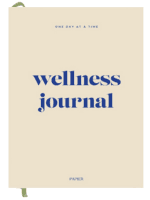
This wellness journal makes it easy to track your goals, sleep, meals, energy, and other important metrics while keeping you mindful with daily check-ins. It’s a great way to create routines that stick and work towards more hormonal balance.
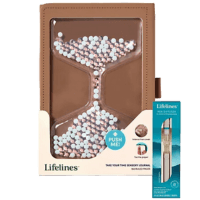
If you are looking for a blank journal, this set is both fun and practical. It incorporates sensory tools and aromatherapy. The interactive covers and embossed pages can double as fidget or sensory tools. The pen comes with four different essential oils for you to choose from.
2. Use Hormone Supporting Supplements
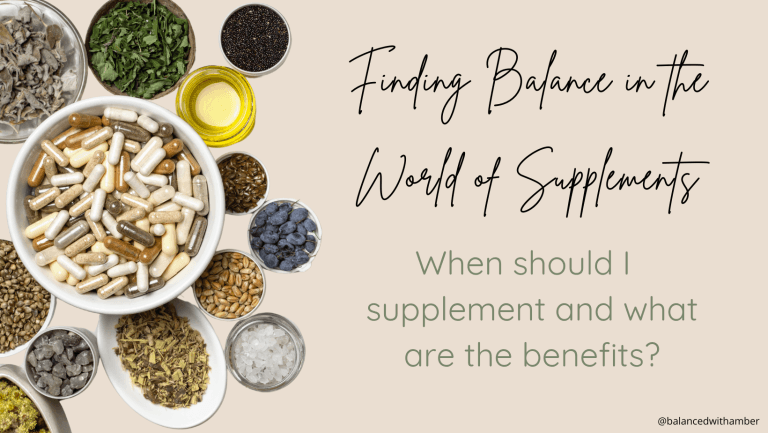
As I have discussed in the past, it is always best to get your nutrients and minerals through whole foods. However, sometimes it is impossible to do based on dietary restrictions, nutrient density and quality of the food, how our body processes the food we eat, financial or geographical access to certain foods, etc.
You should still be very cautious of supplements that make claims without supporting evidence, have questionable ingredients or extremely high doses, and/or are not third-party tested. With that being said, here are a few vitamins and minerals that are known for their support of the endocrine system and hormonal balance1,2,3,4,5:
- Calcium
- Inositol
- Magnesium
- Omega-3s
- Selenium
- Zinc
- B Vitamins
- Vitamin D
- Probiotics
Although there are other essential Vitamins and Minerals that I did not list, these are some of the major ones that we are more likely to see deficiencies in. An example of a mineral I didn’t list is Iodine. Although Iodine is essential for Thyroid function, it is really rare to see iodine deficiencies in most developed countries. And, high-dose Iodine may slow or shut down thyroid function, making it potentially very dangerous for those with an underactive thyroid (I had first-hand experience of this).
Below are a couple of my recommendations for brands that I trust. You can check out my article on Supplements for additional information and recommendations on many of the above-noted Vitamins as well! Make sure to consult a healthcare provider before making changes to the medications or supplements you taking. This is especially essential for any supplement that is not a water-soluble vitamin, as you could be doing more harm than good if the type and amount of supplement is not what you need, similar to my example above!

Pure Encapsulations supplements are made with high-quality ingredients and backed by science. They are free from common allergens and unnecessary additives and have many options. They are still fairly affordable and one of my go-to brands!

If you are looking for something more cost-effective, this brand of supplements is one of my favorites. It has high-quality standards and is affordable. It has almost every blend I am looking for!
3. Add in Hormone Supporting Adaptogens and Herbs
There are so many amazing natural adaptogens and herbs out there as well. Most adaptogens are well known for their endocrine-supporting properties, making them a perfect addition! Here are some of my favorites that support your endocrine system6,7,8:
- Ashwagandha
- Black Cohosh
- Chasteberry
- Dandelion Root
- Eleuthero
- Ginger
- Ginseng (multiple varieties)
- Lemon Balm
- Licorice Root
- Rhodiola
- Spearmint
- Tumeric
There are many more herbs and other natural substances that can help with different aspects of hormonal balance. So, this is not an exhaustive list, but a great place to start! I consume a lot of these as loose-leaf tea, but many of them may be available in tincture, supplement, tea, or other forms. Although many of these are low-risk, it is still important to speak to your healthcare provider before adding these into your routine to ensure there is no risk to your specific situation (ie. pregnancy). Below are a couple of my recommended options!
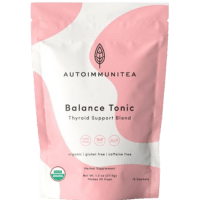
This herbal tea blend is packed full of herbs for thyroid, digestion, and adrenal support. Plus, it is made with autoimmunity in mind and has anti-inflammatory properties. They have high-quality standards, are certified organic, and even eco-friendly!
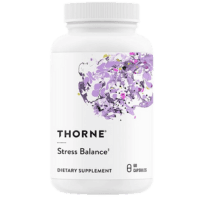
Thorne has high-quality standards. They have a large range of blends to choose from. Their stress blend has ingredients that support the adrenals and the endocrine system overall, but has many other options to meet your specific needs!
4. Utilize a Fitness Tracker
Fitness trackers can be used for more than just tracking movement. Many of them can track your menstrual cycles, heart rate, stress levels, body temperature, etc. These tools can help tell you when your body is being stressed or where you may be in your menstrual cycle. This helps you make the best decisions for your body and aids in hormonal balance. Here are a couple of great options that prioritize some of the above-mentioned metrics.
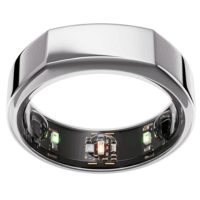
The Oura Ring is a game-changer for tracking your hormonal health, especially if you aren’t into bulky watches. Monitoring key metrics like sleep quality, heart rate, activity, and body temperature helps you spot patterns and imbalances that affect your hormones. It makes it easier to make changes in real-time and track the impacts of your changes long-term.
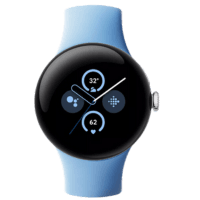
If you enjoy smart watches, the Pixel Watch 2 is a great choice (for Android users). It tracks everything from heart rate and stress levels to sleep quality and even skin temperature, giving you real insights into how your body’s doing. You can track your cycle, how your body is recovering, and more!
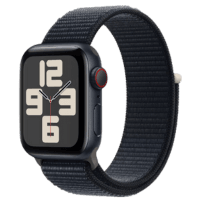
If you are an iPhone user, this is one of the newest models of Apple Watches, which now comes with built-in temperature sensors. You can track your physical activity, sleep, and stress, among other metrics, to help find better hormonal balance.
5. Continue to Educate Yourself
The best thing that we can do for our bodies is to learn how they operate and how to best support them! Because we are all different, not everything will work the same for everyone. If we can leverage our own knowledge alongside the knowledge and expertise of our medical professionals, we can better advocate for ourselves and find the right solutions!
Make sure that you are getting your information from a range of sources and validate credibility. If you’d like to get into the scientific side of it, check out research articles and medical journals. There are also a variety of books, podcasts, and online articles. Check out my resource page for some book options, or reach out to me for additional suggestions!
Conclusion
Now that we have explored what hormonal wellness is, how to find out if you are experiencing any imbalances yourself, and different steps to take to help feel better and find hormonal balance, hopefully, you feel a little more prepared to take on this task. Even the littlest of steps are still progress.
If you are still looking for more support, reach out to me for a free 30-minute consultation. We can go over all of your options and discuss if my coaching services are right for you!
Good luck on your journey, and feel free to share in the comments what is working or what other support you are looking for!
- Hartman, Mor-Li, and Mohammed S Razzaque. “Editorial: Endocrine Regulation of Mineral Ions and Their Relevance to Metabolic Diseases.” Frontiers in Endocrinology, vol. 15, 3 Apr. 2024, www.ncbi.nlm.nih.gov/pmc/articles/PMC11021768/, https://doi.org/10.3389/fendo.2024.1391096. Accessed 3 Oct. 2024. ↩︎
- National Institutes of Health. “Vitamin and Mineral Supplement Fact Sheets.” Nih.gov, 2017, ods.od.nih.gov/factsheets/list-VitaminsMinerals/. ↩︎
- Didier Majou, and Anne-Lise Dermenghem. “DHA (Omega-3 Fatty Acid) and Estradiol: Key Roles in Regional Cerebral Glucose Uptake.” Oilseeds and Fats, Crops and Lipids, vol. 30, 1 Jan. 2023, pp. 22–22, https://doi.org/10.1051/ocl/2023023. ↩︎
- Nasiadek, Marzenna, et al. “The Role of Zinc in Selected Female Reproductive System Disorders.” Nutrients, vol. 12, no. 8, 16 Aug. 2020, p. 2464, https://doi.org/10.3390/nu12082464. ↩︎
- “What Is Inositol?” Cleveland Clinic, 6 Aug. 2023, my.clevelandclinic.org/health/drugs/25173-inositol. ↩︎
- Liao, Lian-ying, et al. “A Preliminary Review of Studies on Adaptogens: Comparison of Their Bioactivity in TCM with that of Ginseng-like Herbs Used Worldwide.” Chinese Medicine, vol. 13, no. 1, 16 Nov. 2018, www.ncbi.nlm.nih.gov/pmc/articles/PMC6240259/, https://doi.org/10.1186/s13020-018-0214-9. ↩︎
- “What Are Adaptogens & Types.” Cleveland Clinic, 10 Feb. 2022, my.clevelandclinic.org/health/drugs/22361-adaptogens. ↩︎
- “\R\N \N the 15 Best Herbs for Hormone Balance\N \R\N.” Plateandcanvas.com, 2022, www.plateandcanvas.com/the-15-best-herbs-for-hormone-balance. Accessed 3 Oct. 2024. ↩︎