
Year of Wellness: Finding Balance in Hormonal Wellness

The Search for Answers: Struggling with Hormonal Imbalance
Have you tried birth control? Maybe you just need therapy. Every woman deals with this; it is normal. Perhaps you aren’t trying hard enough. You just need to lose weight. Have you tried eating less? Maybe it’s all in your head.
You are not alone if you have heard any of these things when seeking help for mysterious symptoms or hormonal concerns. These are all statements that healthcare professionals have said to me while I was trying to get answers for the fatigue, joint pain, irregular periods, constant weight fluctuations, and brain fog, among other symptoms.
After receiving my diagnoses of Hashimoto’s Thyroiditis and Polycystic Ovary Syndrome (PCOS), I was still met with challenges from doctors. I was offered birth control and medications without any education on potential side effects, information related to the root cause, or how to heal. I have even been told there was nothing I could do and that I would be reliant on medication for the rest of my life. Since then, I have dedicated my time to research, gaining further education, and experimenting on myself.
Although an exhausting journey, there is a lot of good that has come from it. I am going to share with you what a hormonal imbalance looks like and how you can identify if this impacting you. We will also look at what the next steps are if you are experiencing a hormonal imbalance. Then, I follow up with additional articles to give you some resources and tips on targeted lifestyle changes you can implement that are research-backed to help relieve symptoms. These changes have even helped me completely reverse my PCOS!

- As a note: The content of this blog is not intended to diagnose, treat, cure, or prevent any disease. It is important to consult with a qualified healthcare professional before making any changes to your diet, exercise, medication, or other health-related routines
- This article contains affiliate links. These links reflect my honest recommendation of products/services, but I may receive compensation if you purchase using my links. As an Amazon Associate, I earn from qualifying purchases
- For additional on these notes, please review our Disclosure Policy
Understanding Hormones
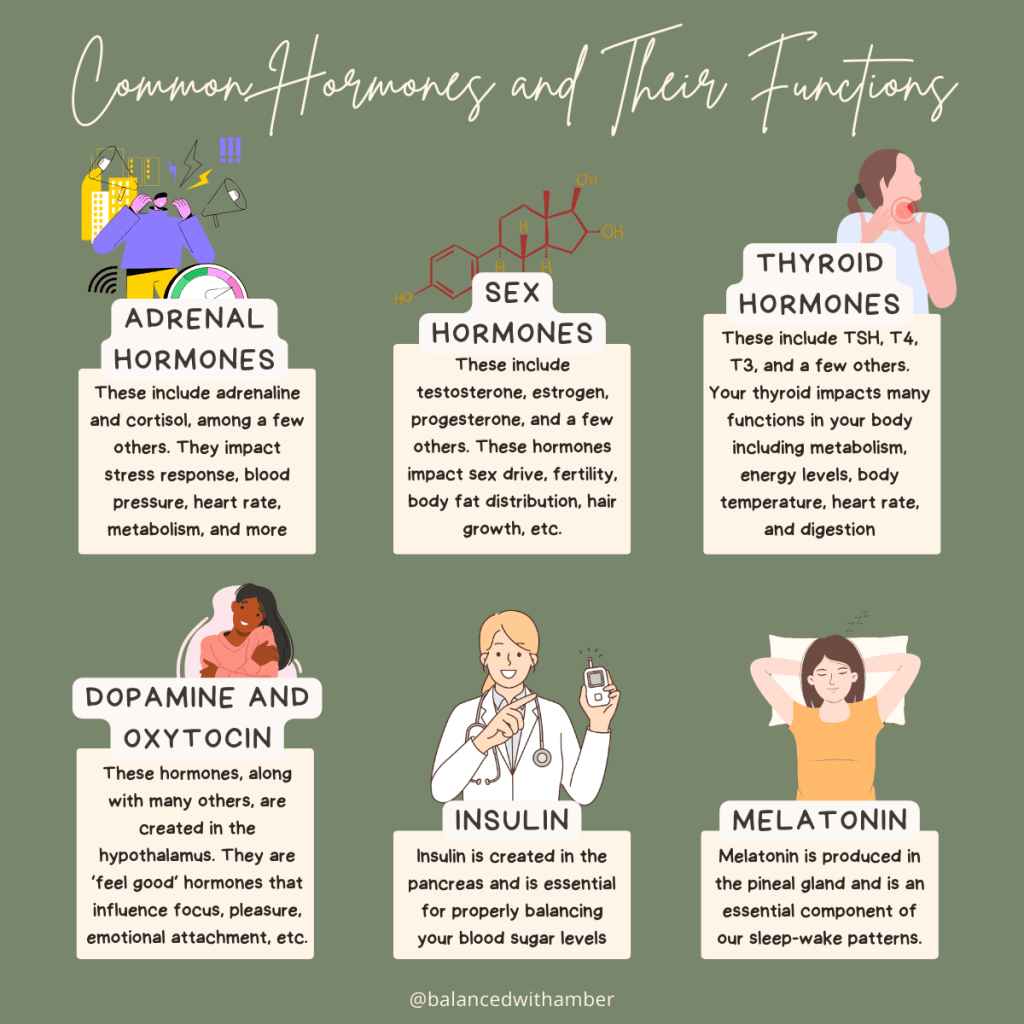
First, hormones are the chemicals in our bodies responsible for sending various signals throughout the body. When we think of hormones, many people may think of our sex hormones, like estrogen and testosterone. However, these are just a small part of our endocrine system.1
We have over 50 different hormones in our bodies that have various purposes! Some of these hormones help regulate growth, metabolism, and fertility. Hormones also play a huge role in our mood, blood sugar, sleep, and skin health.1
Why should we care? Because hormones play such a significant role in so many functions in the body, an imbalance in any of your hormones can cause a vast array of unpleasant to unbearable symptoms that can greatly impact your health. See the graphic below for some of these hormones and their functions.
What Causes Hormonal Imbalance?
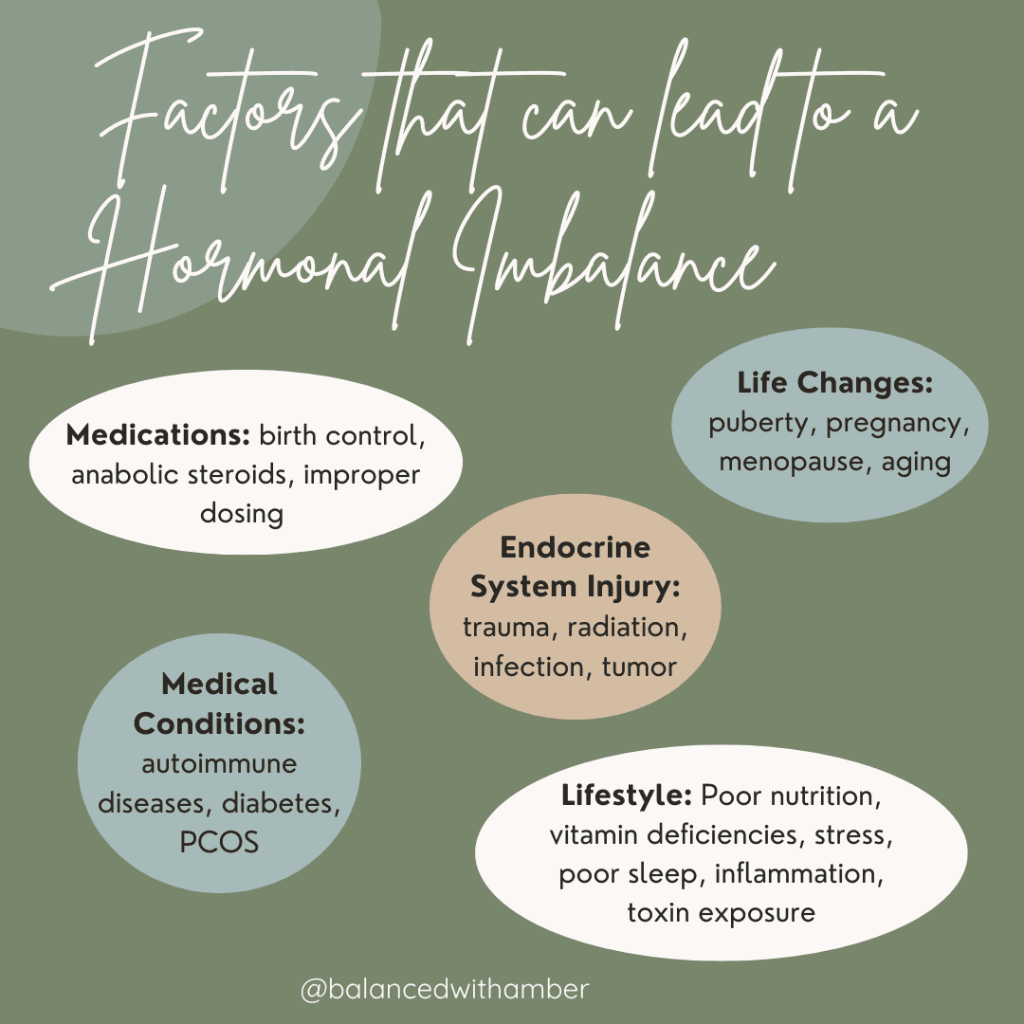
There are so many factors that impact our hormones. Let’s take a look at some of the main factors.
- Natural life progressions such as puberty, pregnancy, menopause, and aging
- Injury to the Endocrine System through trauma, radiation, infection, tumors, etc.
- Medications such as hormonal birth control and anabolic steroids, or improper dosage of many supplements or medications
- Medical Conditions such as autoimmune diseases, diabetes, and PCOS
- Lifestyle can be a major contributor to hormonal imbalance. Things like poor nutrition, vitamin deficiencies, high stress, poor sleep, high inflammation, exposure to toxins or pollutants, etc., can all factor into the functioning of our endocrine system.3
What Conditions are Related to Hormonal Imbalance?
Review below a few of the common conditions related to hormonal imbalance.
| Polycystic Ovary Syndrome (PCOS) | Low Fertility or Infertility |
| Diabetes, Insulin Resistance | Adrenal Insufficiency or Disorders |
| Thyroid Disorders (ie. Hypothyroidism) | Hormonal Acne |
How do I Know if I am Experiencing Hormonal Imbalance?
Are you experiencing symptoms that are unexplained or seem like they could be tied to a hormonal imbalance? Every hormone works a little differently, so there are a lot of symptoms you could be experiencing. But, there are some more common signs of hormonal imbalances.
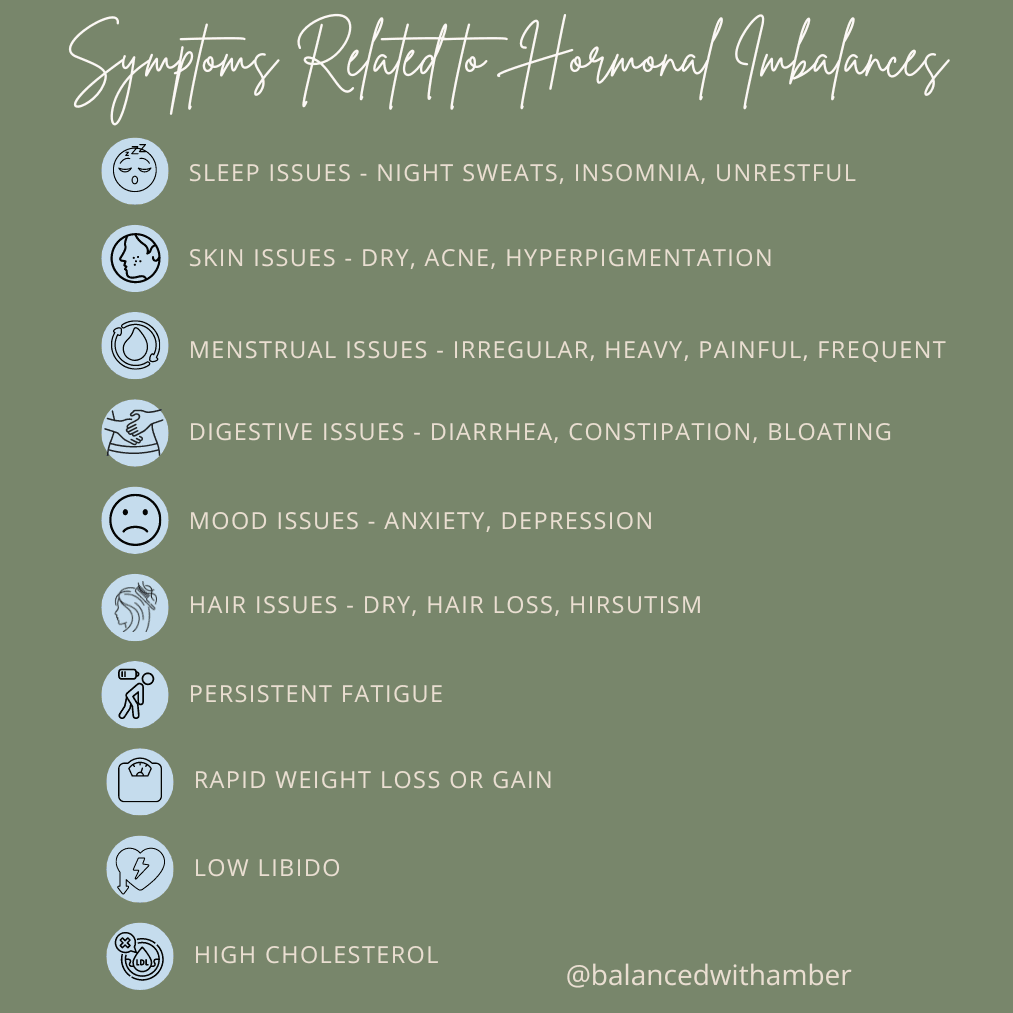
If you have a concern, the best and most accurate way to know if you are experiencing a hormonal imbalance is to meet with a healthcare professional. They can assess your concerns and run tests. These tests are going to vary based on what concern you are having, but getting a thyroid, metabolic, and/or hormone panel may be a place to start.
You can also run these tests yourself through organizations such as Health Labs. This is beneficial if you do not have insurance or are having difficulty getting the tests you need through your doctor. Once you receive the results, you can then follow up with a healthcare professional with concerns or next steps.
When it comes to healthcare professionals, my goal is to give you education and resources so you can be your own best advocate. It is important to make sure your healthcare providers match your goals and support you in getting the answers you need, providing you with all of the options for care.
What do I do if I Have a Hormonal Imbalance?
Now that you have a diagnosis or an idea of what may be causing your symptoms, what is the next step? Well, there are a few layers: prescription medications, supplemental medications, and lifestyle changes
Most doctors are trained to prescribe medication to treat the symptoms. Although medications may provide relief from symptoms, many of them do not get to the root cause of the issue. And, you have to consider the side effects. You may also see symptoms return or worsen once you stop certain medications. For this course of action, speaking to your team of providers and weighing the benefits and risks is going to be most important.
If you are working with a holistic or functional healthcare professional, you may also be offered supplemental medications. These may include vitamins, minerals, herbs, or things like bio-identical hormones. These can also help to alleviate symptoms. Some of them may start to get to the root cause, but not in the most sustainable way. Without lifestyle intervention, many supplements would have to be taken long-term.
One downside of supplements is that they are not FDA-regulated, and some of them have claims that are not based on science-backed research. Make sure that if you are considering this route that you are going with options that are third-party tested and have science-backed research to determine the safety or risk of the supplement. For more on this, read my article on supplements here.
Finally, you have lifestyle changes. These changes are going to be most likely to get to the root cause. Some things cannot be changed through lifestyle changes, like genetic factors. But, our environment does play a huge role in a lot of hormonal conditions. In the most basic sense, reducing stress, increasing sleep, focusing on nutrition, and gentle movement are going to be the best ways to start. The goal is to reduce inflammation in the body, increase natural energy, and replenish nutrients.
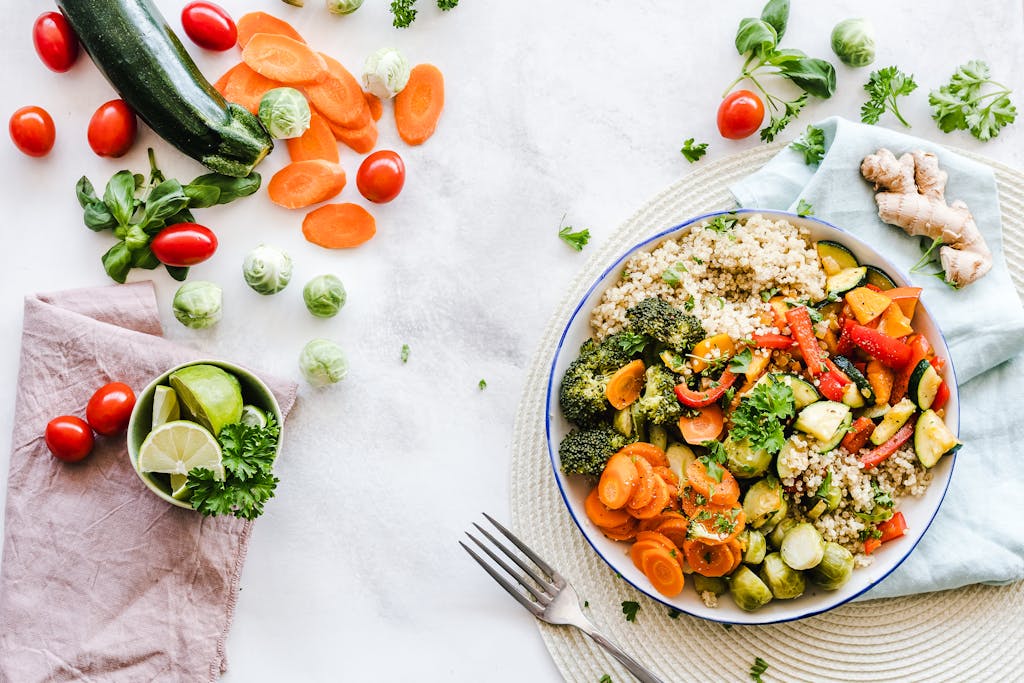
Everyone is different based on genetics, past lifestyle, environment, resources, current lifestyle, and availability. For most people, a combination of the three options above at different points in life may be the best solution. Click here to explore some of my top suggestions related to lifestyle that I have found have some of the most profound effects.
Conclusion
Although this can be an overwhelming subject for many, hopefully, the information today has brought you some clarity. If you are looking for more in-depth information on this subject, check out my Resource Page or any of the sources cited in the footnotes below. Feel free to reach out to me directly as well for individualized support through my Health and Wellness Coaching Services. Please also check out these five additional tips and resources to help achieve hormonal balance.
I wish you all the best of luck in your wellness journey, and thank you for stopping by!
- Cleveland Clinic. “Hormones: What They Are, Function & Types.” Cleveland Clinic, 23 Feb. 2022, my.clevelandclinic.org/health/articles/22464-hormones. ↩︎
- Campbell, Miles, and Ishwarlal Jialal. “Physiology, Endocrine Hormones.” PubMed, StatPearls Publishing, 26 Sept. 2022, www.ncbi.nlm.nih.gov/books/NBK538498/. ↩︎
- Cleveland Clinic. “Hormonal Imbalance: Causes, Symptoms & Treatment.” Cleveland Clinic, 4 Apr. 2022, my.clevelandclinic.org/health/diseases/22673-hormonal-imbalance. ↩︎
- National Institute of Diabetes and Digestive and Kidney Diseases. “Endocrine Diseases | NIDDK.” National Institute of Diabetes and Digestive and Kidney Diseases, 18 Dec. 2019, www.niddk.nih.gov/health-information/endocrine-diseases. ↩︎
- “7 Signs of a Hormonal Imbalance — and What to Do about It.” Uclahealth.org, UCLA Health, 3 July 2024, www.uclahealth.org/news/article/7-signs-hormonal-imbalance-and-what-do-about-it. ↩︎

Nicee.. I think eating nutrient-rich food can really help regulate hormones! Focusing on food like fruits, veggies, lean proteins, and healthy fats is really good. Cutting down on sugar and processed food can go a long way too. Best speaking to a healthcare provider if there is any symptoms of imbalance – they are the pros!
Absolutely! You nailed it! You have some really great insights into nutrition and hormones. I’ll go more into this in my next article later this month! Thank you for stopping by and reaching out! Have a beautiful rest of your week!
I did not know we have over 50 different hormones in our body! What I knew was that hormones play a major role in how we feel and how we react to things/circumstances around us. It was fun learning more about hormonal balances here. Good stuff!
Right?! It is wild just how much of a role they play in our bodies! I’m glad you were able to learn some things! Reach out with any questions. Thank you for stopping by. Hope you have a beautiful rest of your week!
Thanks for sharing! I found the best thing for me was eating better and getting the best sleep possible. I know that doesn’t work for everyone but if you pay attention to what you eat and sleep, and are honest with yourself. I think it would change more people’s lives!
Hey Jarrod! Thank you for stopping by and thank you for your insights! And I am glad to hear you have found lifestyle changes that are working for you! Those two factors have gone a long way for me as well! My article later this month will go a little more into that! Thank you again for stopping by and enjoy the rest of your week!
Good read. I love your resource page
Thank you! And I’m working on adding to the resource page regularly as well! Thank you for stopping by and enjoy your week!